Degrees of kinship, also called a table of consanguinity, are used to determine the “next of kin” or most closely related family members. Under the rules of civil law, each person in the line of relationship counts as one degree.
To determine a person’s degree of relation to the decedent using the chart below, begin with the decedent (the deceased person) and follow the line connecting the decedent to the other person. Each person passed through before reaching the final person adds one degree to the total, including the final person.
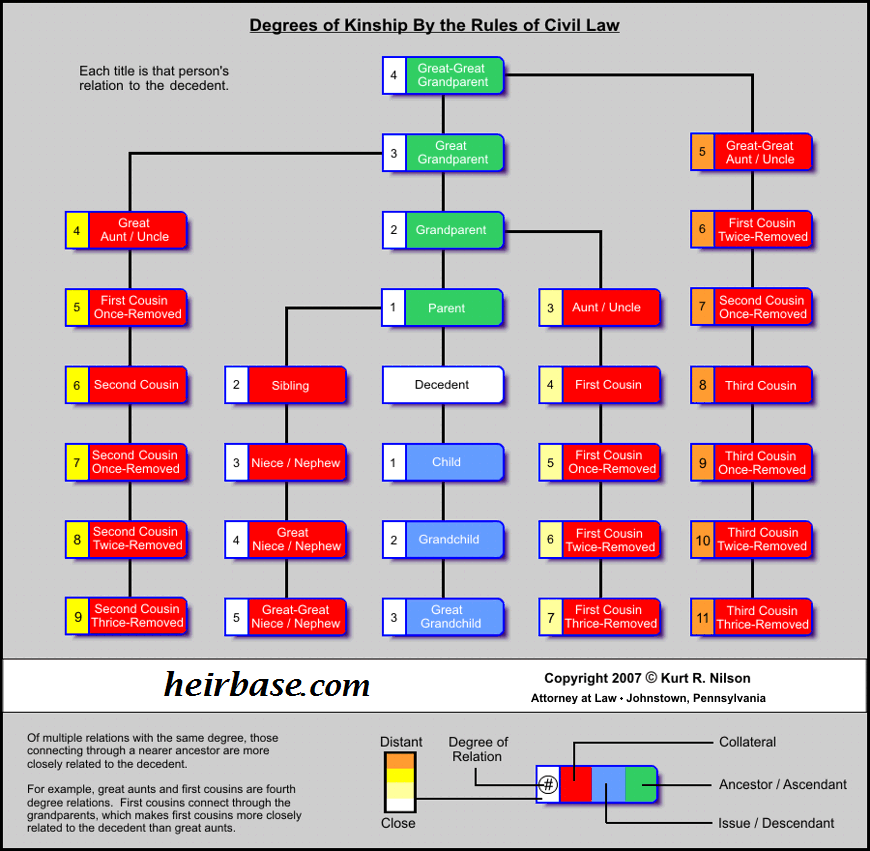
Common Degrees of Kinship
The civil law method counts each person in the line of relationship as one degree. The following examples illustrate common degrees of kinship shown in the chart above.
- Parent and child: 1st degree
- Sibling: 2nd degree
- Grandchild: 2nd degree
- Niece or nephew: 3rd degree
- Aunt or uncle: 3rd degree
- First cousin: 4th degree